
Ellis County 911 director outlines AI call reviews, live translation test in update to commissioners
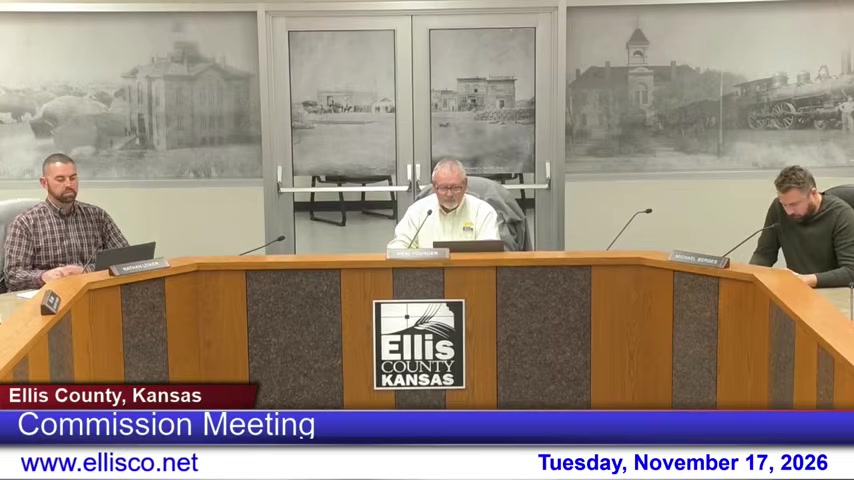
Ellis County Communications Director Jeff Ridgway told the Ellis County Commission on Tuesday that the county's 911 center plans to begin using an artificial intelligence system after the first of the year to review every emergency call, rather than the small sample staff can now check by hand.
Commissioners had asked for an overview of 911 services, and no action was taken. Ridgway said Ellis County Communications is the county's primary public safety answering point, providing 24-hour emergency communications and dispatch for about 10 public safety agencies, including law enforcement, fire and EMS.
Ridgway said the industry standard is to review about 3% of calls for quality assurance, and the center has been averaging about 2.5%, with his assistant director spending about half his time on those reviews. He said the Eventide system discussed during the budget process would review the call, the dispatch data and the center's protocols, allowing the center to review all of its calls.
He said the state 911 board had asked the day before whether the county would be willing to beta test an AI interpreting agent that would translate calls live, so a dispatcher would hear a non-English-speaking caller in English and the caller would hear responses in their own language. He said the center now connects to the Language Line interpretation service about once or twice a month, and that texting callers, which auto-translates, has been successful in overcoming language barriers.
Ridgway said most 911 calls now come from cellphones, with traditional landlines declining, and that callers can also reach the center by text message. He said Kansas has had text-to-911 capability since about 2014 and is ahead of many places nationally. Dispatchers can also start a video call with a caller, though he said the center has rarely, if ever, used that feature on a live call.
He said that if the center cannot answer a 911 call, it rolls over first to Pratt, and that the state is looking at software to share call data between answering points during those rollovers, as well as a system that would let alarm companies send alarm data electronically. He said the county has few alarm calls and he would not want to pay an annual fee for that service, though a one-time cost might be worth considering.
Asked about areas without cell service, Ridgway said the county has some dead spots but few problems where most residents live. He said some calls from Barton County reach Ellis County through a tower near the county line in the southeast corner.
Ridgway said that when the county lost its computer-aided dispatch system in an incident in September, the center relied on an offline backup that worked but was "a step above paper and pencil." He said a backup dispatch product he researched would cost about $10,000 a year, which he could not justify for software he hopes never to use, so he has drafted an in-house alternative using an AI tool and plans to evaluate it with the county's IT staff next month.